Introduction
You see them everywhere. Those mesmerizing images that seem to go deeper and deeper, revealing hidden worlds inside a single frame. They pull you in. They make you stop scrolling. You wonder how they work. But when you search for answers, you find broken links, outdated tutorials, or explanations so complex they might as well be in another language.
You want to understand the technology. You want to create one yourself. This guide answers both needs. Zoomquilt is a method and concept for creating images that reveal increasing levels of detail through interactive zoom. It transforms static pictures into immersive visual experiences. Whether you are an artist, a marketer, a teacher, or a curious creator, understanding how Zoomquilt works gives you a powerful tool for engagement.
In this guide, you will learn what Zoomquilt actually means, how zooming image technology works, the different types you can create, a clear step-by-step process to build your own, common mistakes to avoid, and practical tips for professional results.
No fluff. No confusion. Just practical knowledge you can apply immediately.
Quick Answer: What Is Zoomquilt?
Zoomquilt is the practice and technology behind creating images that display progressively deeper layers of visual detail when a user zooms in. Rather than showing one flat image, a Zoomquilt presentation reveals nested scenes, textures, or data within a single interactive frame.
Key takeaways:
- Zoomquilt creates a deep zoom effect using layered image tiles
- It is used for art, education, data visualization, and marketing
- You can build one using image editing software and web-based viewers
- Quality depends on resolution, layer organization, and smooth transition design
- It works best when each layer offers meaningful new information
What Is Zoomquilt?
Zoomquilt refers to a visual technique where an image contains nested layers that become visible as the viewer zooms deeper. Unlike a standard zoom that simply enlarges pixels, a true Zoomquilt experience reveals entirely new compositions within each level.
The concept draws from deep zoom technology. Early implementations used massive high-resolution images broken into small tiles. As the viewer zoomed, the software loaded only the tiles needed for the current view, making the experience fast and smooth.
In practical use today, Zoomquilt describes both the artistic result and the method. Artists create layered composites. Designers build interactive presentations. Educators use them to show microscopic details or vast landscapes from a single entry point.
The core idea is simple. One image holds many worlds. The viewer chooses how deep to go.
How Does Zoomquilt Work?
Understanding how Zoomquilt works requires breaking it into two parts: the image structure and the viewing mechanism.
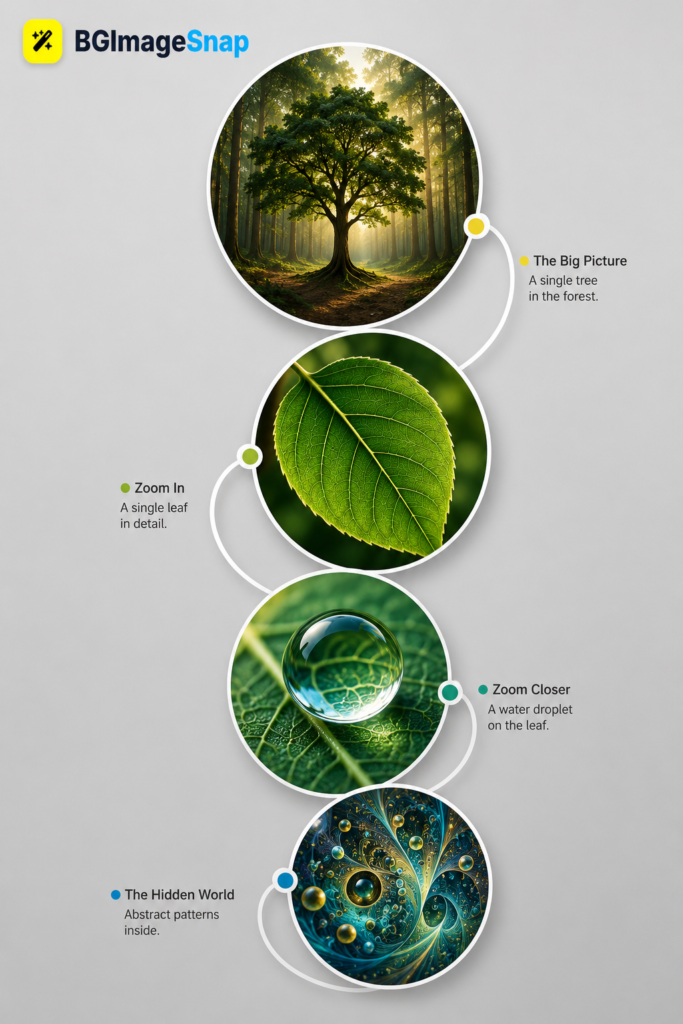
The image structure is composed of multiple layers. Each layer is a complete image at a specific scale. The top layer might show a forest. The next layer reveals individual trees. The next shows bark texture. The deepest layer might display cellular patterns or abstract art embedded within.
The viewing mechanism handles the transition. When a user clicks or scrolls to zoom, the viewer does not simply magnify the top layer. Instead, it fades or blends into the next layer. This creates the illusion of traveling deeper into the image rather than just closer to it.
Technically, this requires high-resolution source files. Each layer must maintain clarity at its intended display size. If a layer is meant to be viewed at full screen, it needs enough pixels to fill that space without blurring.
Modern implementations often use web libraries or specialized software that manages tile loading and smooth transitions. The user does not need to understand the code to appreciate or create the effect, but knowing the mechanics helps you plan your design.
Types of Zooming Images
Not every zooming image is a Zoomquilt. There are distinct categories with different purposes. Simple Scale Zoom: The image gets larger. Pixels stretch or sharpen based on settings. There are no hidden layers. This is common in e-commerce product viewers. Deep Zoom: Similar to Zoomquilt but focused purely on resolution. You start with one massive image and zoom to see fine detail. No artistic layer replacement happens.
Layered Zoomquilt: This is the true form. Each zoom level reveals a new artistic or informational layer. The transition is part of the experience. It combines storytelling with interaction. Parallax Zoom: As you zoom, different layers move at different speeds. This creates depth through motion rather than replacement. It is often used in digital art and gaming backgrounds. Choosing the right type depends on your goal. If you want to show hidden details, use layered Zoomquilt. If you want to display high-resolution photography, use deep zoom. If you want dynamic motion, consider parallax.
How to Create a Zooming Image: A 7-Step Process
Building your own Zoomquilt does not require expert programming skills. It requires careful planning, quality images, and the right workflow.
Step 1: Define Your Concept
Decide what story or detail progression you want. A nature scene going from landscape to leaf? A city view diving into street art? Your concept determines the number of layers.
Step 2: Gather High-Resolution Source Images
Each layer needs sufficient resolution. If your deepest layer will display at full width, calculate the pixel dimensions needed. For a 1920 pixel wide display, your deepest layer should be at least that wide.
Step 3: Design Your Layers
Create each layer as a separate image file. Keep them organized. Name them clearly. Layer one is the entry point. Layer five is the deepest view.
Step 4: Combine and Blend
Use image editing software to build composite previews. Check how each layer looks when scaled. Ensure colors and lighting feel connected, even when content changes.
Step 5: Export in Proper Format
Save master files in a lossless format like PNG or TIFF for editing. For web use, create optimized versions. Do not invent compression ratios. Test file sizes manually.
Step 6: Build the Interactive Viewer
Upload your layers to a web-based deep zoom viewer or embed them in a website using standard libraries. Ensure the transition speed feels natural, not jarring.
Step 7: Test Across Devices
Check your Zoomquilt on desktop, tablet, and mobile. Load times vary. If layers are too large, mobile users will experience delays.
Tools for Building Zooming Images
Several categories of tools help create Zoomquilt presentations. Understanding what each offers helps you choose wisely.
| Tool Type | Purpose | Best For | Consideration |
|---|---|---|---|
| Image Editors | Layer creation and compositing | Artists and designers | Requires manual layer management |
| Deep Zoom Viewers | Tile loading and smooth navigation | Web presentation | Needs high-resolution source files |
| Online Generators | Quick interactive exports | Beginners and quick projects | Limited customization options |
| Custom Web Libraries | Full control over transitions | Developers and advanced users | Requires coding knowledge |
When selecting a tool, consider your audience. A marketing team may prefer an online generator for speed. An artist may prefer full manual control through editing software.
Common Mistakes to Avoid
Creating a Zoomquilt seems straightforward, but common errors reduce the impact.
Using Low-Resolution Deep Layers: The deepest layer often gets overlooked. If it is blurry, the entire experience feels cheap. Always verify resolution at every level. Ignoring Transition Design: A sudden jump breaks immersion. Plan how layers blend. Even a simple fade improves the experience significantly.
Overloading with Too Many Layers: More is not always better. Three to five meaningful layers usually work best. Beyond that, users may lose interest or become confused. Neglecting Mobile Performance: Large image files load slowly on mobile networks. Test file sizes. If a layer takes more than a few seconds to appear, users will abandon the interaction. Skipping the Concept Phase: Jumping straight to image creation leads to disjointed results. A strong concept makes the technology feel purposeful, not just flashy.
Best Tips for Professional Zoomquilt Results
Quality comes from attention to detail. These practices separate amateur attempts from professional experiences. Keep Each Layer Meaningful: Every zoom level should reveal something worth seeing. Do not fill layers with noise or repetition. Use Consistent Lighting: Even when content changes, maintain similar lighting direction and color temperature. This creates subconscious continuity. Optimize File Sizes: Large files improve quality but hurt performance. Find the balance. Use compression tools that preserve visual detail. Design for the First Impression: The entry layer must be compelling. If it does not grab attention, users will never zoom deeper. Test with Real Users: Watch someone interact with your Zoomquilt for the first time. Notice where they hesitate or stop. Adjust based on behavior, not assumption.
FAQ: Common Questions About Zoomquilt
What is the difference between Zoomquilt and a simple zoom?
A simple zoom enlarges the same image. Zoomquilt reveals new visual layers, creating a journey rather than just magnification.
Can I create a Zoomquilt without coding skills?
Yes. Many online tools and image editors allow you to build layered compositions and export interactive viewers without writing code.
How many layers should a Zoomquilt have?
Most effective examples use between three and seven layers. The exact number depends on your concept, but each layer must add value.
Does Zoomquilt work on all devices?
It works best on devices with good processing and stable internet. Very old phones may experience slow loading if files are too large.
What resolution do I need for deep layers?
Deep layers should match or exceed the display resolution where they will be viewed. For standard displays, 1920 pixels wide is a common minimum.
Can I use Zoomquilt for commercial marketing?
Yes. Interactive images often increase engagement time and can improve conversion when used strategically in presentations or landing pages.
Is there a standard file format for Zoomquilt layers?
No single standard exists. Most creators use high-quality PNG or TIFF for editing and optimized JPG or WebP for final delivery.
How long does it take to create a Zoomquilt?
A simple three-layer project may take a few hours. A complex artistic piece can take days or weeks depending on detail and testing.
Conclusion
Zoomquilt transforms a single image into an experience. It combines art, technology, and storytelling into one interactive frame. You do not need to be a programmer or a professional photographer to create one. You need a clear concept, quality source images, careful layer planning, and a willingness to test and refine. The technology behind deep zoom and layered images is accessible. The creative potential is unlimited. Start with one layer. Add depth. Reveal something hidden. That is the essence of Zoomquilt.